A note. This guide is general advice for planning brand and corporate events. Venue rules, permits, food safety and tax or invoicing requirements vary by place and change, so confirm the details with your venue, suppliers and finance team. It is not legal or financial advice.
Anyone can fill a room. The events people talk about afterward are the ones where every detail told the same story, from the invitation to the last goodbye. That is what turns an event into a brand experience. Below is a practical way to build one.
Start with the feeling, not the logo
Define the outcome
Write one sentence: after this event, our guests will feel ___ and do ___. A launch might aim for excitement and sign-ups. A client dinner might aim for trust and a follow-up meeting. If an idea doesn’t help that sentence, leave it out.
Know your guests
Who is coming, where from, and what do they expect? An international team has different needs from local clients: languages, food, travel and timing. The better you know them, the more personal the day feels.
Design every touchpoint
Before: the invitation and the journey
The experience starts when the invitation lands. Make it clear, on-brand and easy to answer, with the practical details guests need: address, dress code, schedule and how to get there.
During: space, flow and food
Think about arrival, where people gather, where they eat and where they can talk quietly. Smooth flow is a form of hospitality. Food and drink are brand moments too, so choose what reflects your story.
After: the follow-up
Send a thank-you within a day or two, share a few photos and ask for feedback. The follow-up is what turns a pleasant evening into a relationship.
Use all five senses
- Sight: a restrained color palette, signs and lighting that match your brand.
- Sound: music at a level that lets people talk, chosen to fit your tone.
- Scent: fresh flowers, herbs or a subtle fragrance. Keep it light, and avoid overpowering anything.
- Taste: food and drinks with a story, from local ingredients to a signature drink.
- Touch: materials people can feel, such as linen, wood, paper and a well-made gift.
Style the space around your brand
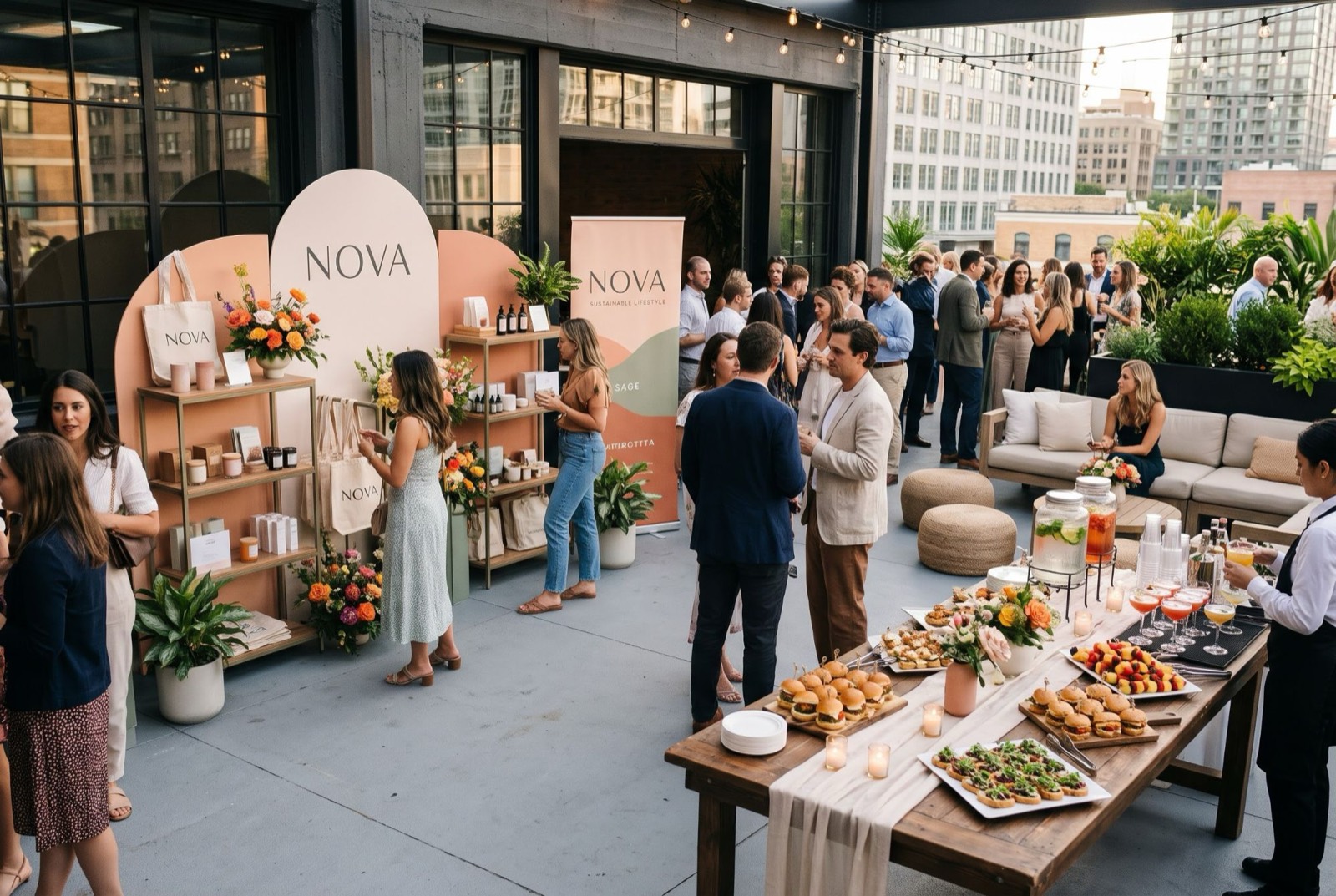
Styling is where a brand becomes tangible. A branded arch or backdrop, a few shelves of products, flowers in your brand colors and warm lighting can turn an ordinary terrace into a world people want to stay in. The key is balance: let the setting do most of the talking, and place your logo where it adds meaning.
Color and materials
Pick two or three brand colors and repeat them in flowers, tablecloths, signs and small details. Natural materials like wood, linen and plants make a space feel welcoming.
Signs and focal points
Create one or two clear focal points, such as an arch, a display wall or a long table, so guests know where to look and where to take photos.
Make people part of it
The best brand experiences invite participation. Give guests something to do, taste, try or make, and create comfortable places to talk: lounge corners, standing tables and a shaded spot to sit. Train your team to host, not just to staff, so each guest is greeted and introduced.
Protect the experience with the details
A realistic schedule
Build in time for set-up, testing and breaks. Share the schedule with suppliers and your team in writing.
A plan for the weather and the unexpected
For outdoor events, have a covered backup you actually like. Have spare power, extra seating and a named person for problems.
Language and accessibility
For an international team, offer signs and materials in the languages people use, and consider interpretation for key moments. Check step-free access, seating and quiet spaces.
Measure what matters
Decide how you will know it worked before you start. Useful measures include guest feedback, conversations started, content created, follow-up meetings and sales inquiries. A short thank-you survey sent the next day gives you honest answers while the event is fresh.
A brand event checklist
- Write the outcome in one sentence.
- Define your guests and what they need.
- Map the journey from invitation to follow-up.
- Choose a palette, materials and one or two focal points.
- Plan food, drink, sound and scent to match the story.
- Brief your team to host, and confirm every supplier in writing.
- Prepare a weather plan, a schedule and language support.
- Collect feedback and follow up within a few days.
How entre.mesa can help
We don’t only organize events; we style them. For brand and corporate events in Spain, you work with one English-speaking contact while we coordinate venues and suppliers in Spanish, plan the logistics and design the space, from backdrops and florals to lighting and tables. See our services and our guide to hosting a corporate event in Spain, or tell us about your event.
Common questions
How far ahead should we plan a brand event?
For larger events, three months or more is a good starting point. For smaller gatherings, four to eight weeks is often enough. Popular venues, caterers and suppliers book up early, so start sooner if you can.
How much branding is too much?
If guests notice the logo before the atmosphere, it is probably too much. Let color, materials, scent and service carry the brand, and keep logos to a few well-placed moments, such as the entrance and the welcome gift.
Can you plan a brand event in Spain for an international team?
Yes. You work with us in English, and we coordinate venues and suppliers in Spanish, plan the logistics and style the space. See our guide to hosting a corporate event in Spain.
How do we know if the event worked?
Decide before the event what success looks like, such as conversations started, feedback, content created or follow-up meetings, and measure those. Attendance alone doesn’t tell you how people felt.